Stay on top of every lead with CRM
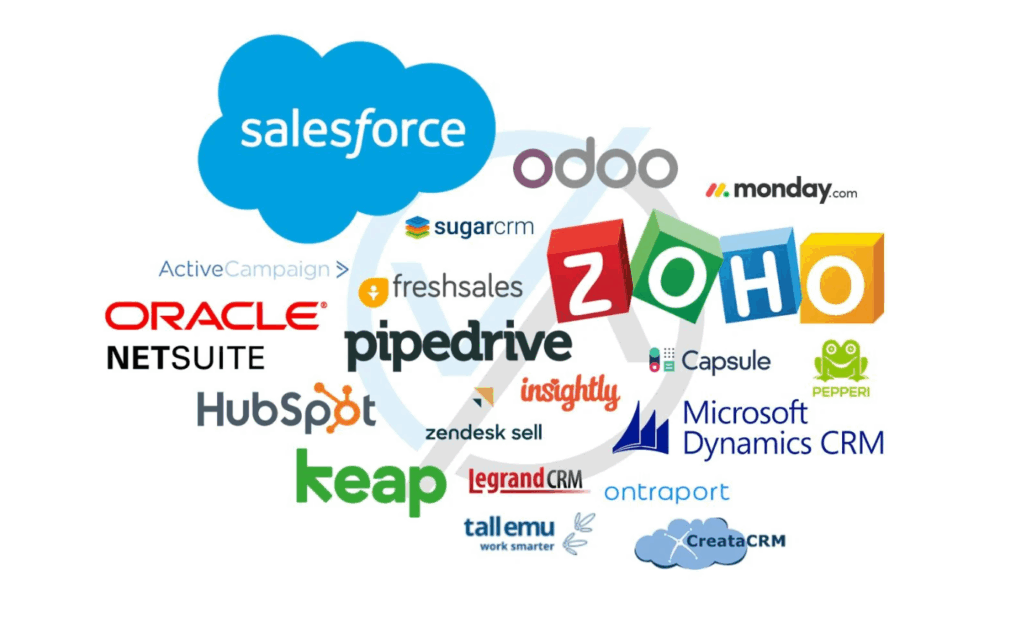
In today’s fast-paced sales environment, staying on top of every lead is critical to driving growth and maximizing revenue. Missed follow-ups, disorganized data, and poor communication can cost businesses valuable opportunities.
Customer Relationship Management (CRM) systems offer a powerful solution by centralizing lead information, automating workflows, and providing real-time insights. With the right CRM, teams can track every interaction, prioritize high-value prospects, and nurture relationships more effectively. By streamlining processes and enhancing collaboration, CRM tools empower sales professionals to convert leads faster and with greater precision.
- Stay on Top of Every Lead with CRM
- Maximize Lead Management with CRM: A Comprehensive Guide
- What Are the 4 Key CRM Principles to Effectively Manage Every Lead?
- Centralized Data Management
- Lead Tracking and Segmentation
- Automation of Routine Processes
- How can CRM help you effectively track and manage every lead?
- Centralized Lead Data Management
- Automated Lead Tracking and Scoring
- Enhanced Follow-Up and Nurturing Processes
- What are the essential CRM best practices to effectively manage and track every lead?
- Centralize All Lead Data in a Unified CRM System
- Implement Consistent Lead Scoring and Qualification Processes
- Automate Lead Tracking and Follow-Up Workflows
- How can a CRM help you manage and track every lead effectively?
- Centralized Lead Information for Complete Visibility
- Automated Lead Tracking and Follow-Up
- Improved Lead Scoring and Prioritization
- Frequently Asked Questions
Stay on Top of Every Lead with CRM
Effectively managing leads is crucial for any business aiming to drive consistent sales growth, and a powerful Customer Relationship Management (CRM) system is the key to achieving this. By centralizing lead information, tracking engagement, and automating key processes, CRM tools allow sales teams to maintain continuous visibility over every potential customer. From the initial point of contact to the final sale, CRM platforms provide real-time insights and actionable data, ensuring no opportunity slips through the cracks.
This level of organization not only improves responsiveness but also enables personalized interactions, increasing conversion rates and fostering long-term customer relationships. With the right CRM, businesses can streamline their sales funnel, prioritize high-value leads, and maintain a competitive edge in fast-moving markets.
Centralize Lead Information for Maximum Efficiency
One of the most significant advantages of using a CRM is the ability to centralize all lead information in a single, accessible platform. Instead of relying on scattered spreadsheets, sticky notes, or disparate email threads, sales teams can store every detail—from contact information and communication history to preferences and past interactions—in one organized space. This unified database ensures that every team member, whether in sales, marketing, or customer support, has access to accurate and up-to-date lead data.
As a result, follow-ups are faster, duplicate efforts are minimized, and the overall workflow becomes more efficient. Centralization also enables data-driven decision-making, allowing managers to analyze lead behavior and trends more effectively.
Automate Follow-Ups to Never Miss an Opportunity
Timely communication is critical in converting leads, and CRM systems offer powerful automation tools that ensure no lead falls through the cracks. From sending personalized email sequences to scheduling reminder tasks for calls, CRM platforms can automate routine follow-ups based on specific triggers such as website visits, form submissions, or email engagement. This not only saves valuable time for sales representatives but also improves the lead nurturing process by delivering relevant content at the right moment.
Additionally, automated workflows can flag high-potential leads for immediate attention, enabling teams to focus their efforts on prospects most likely to convert. With automation, businesses can maintain consistent communication and build stronger relationships without manual tracking.
Gain Real-Time Insights with CRM Analytics
A robust CRM doesn’t just store data—it transforms it into actionable real-time insights that drive smarter sales strategies. Through built-in analytics and reporting dashboards, teams can monitor key performance metrics such as lead conversion rates, average deal size, and sales cycle length. These data visualizations help identify bottlenecks in the sales pipeline and highlight which marketing efforts are generating the highest-quality leads.
Managers can use these insights to adjust tactics, optimize resource allocation, and forecast future revenue more accurately. Furthermore, with mobile access and live updates, teams can make informed decisions on the go, ensuring they remain agile and responsive in dynamic sales environments.
| Feature | Benefit | Impact on Lead Management |
|---|---|---|
| Contact Tracking | Store all lead details in one place | Eliminates data silos and improves team collaboration |
| Automated Workflows | Set triggers for emails and tasks | Ensures consistent follow-up and reduces human error |
| Sales Pipeline Dashboard | Visualize every stage of the lead journey | Identifies stalls and accelerates conversions |
| Lead Scoring | Prioritize high-value prospects | Focuses efforts on leads with the highest potential |
| Real-Time Reporting | Access up-to-the-minute analytics | Empowers data-driven decisions and forecasting |
Maximize Lead Management with CRM: A Comprehensive Guide
What Are the 4 Key CRM Principles to Effectively Manage Every Lead?
Centralized Data Management
Centralized data management is one of the foundational CRM principles that ensures all customer information is collected, stored, and accessible from a single, unified platform. This approach eliminates data silos and enables sales, marketing, and customer service teams to work from the same verified information. When every lead’s interaction—whether it’s an email, call, website visit, or social media engagement—is recorded in one place, organizations can maintain consistency and avoid duplication.
A centralized system also improves data accuracy over time, supports compliance with data protection regulations, and enhances reporting capabilities.
- It ensures that every team member has access to up-to-date lead profiles, fostering alignment across departments.
- It reduces the risk of losing critical lead details during handoffs between sales representatives or departments.
- It allows for the automation of data capture from multiple channels, improving efficiency and reducing manual entry errors.
Lead Tracking and Segmentation
Effective CRM relies heavily on the ability to track leads throughout the customer journey and categorize them based on relevant criteria such as behavior, demographics, and engagement level. Lead tracking provides visibility into where each prospect stands in the sales funnel, enabling timely follow-ups and personalized communication. Segmentation, on the other hand, allows businesses to tailor marketing messages and sales strategies to specific groups, increasing relevance and conversion rates.
This principle ensures that leads are not treated as a homogenous group but are nurtured according to their unique needs and interests.
- Tracking enables sales teams to identify high-intent leads who are ready for conversion, prioritizing efforts efficiently.
- Segmentation supports targeted email campaigns, product recommendations, and content delivery based on user preferences.
- It facilitates lead scoring, where prospects are ranked based on their likelihood to convert, guiding resource allocation.
Automation of Routine Processes
Automation is a critical principle in modern CRM systems, allowing organizations to streamline repetitive tasks and focus on building relationships rather than administrative work. Common automated processes include sending follow-up emails, scheduling reminders, updating lead statuses, and syncing data across platforms. By reducing manual intervention, automation minimizes errors, speeds up response times, and ensures no lead falls through the cracks.
It also enables scalability, empowering teams to manage larger volumes of leads without proportional increases in effort or staffing.
- Automated workflows ensure consistent communication with leads, such as welcome emails or nurture sequences, at optimal times.
- Task automation frees up sales representatives to spend more time on high-value activities like consultations and closing deals.
- Integration with marketing tools allows for real-time responses to lead behavior, such as triggering a follow-up after a whitepaper download.
How can CRM help you effectively track and manage every lead?
A CRM (Customer Relationship Management) system enables businesses to effectively track and manage every lead by centralizing lead data, automating workflows, and providing actionable insights throughout the sales funnel. With a CRM, sales and marketing teams gain visibility into each lead's journey, from initial contact to conversion, ensuring no opportunity is missed. By organizing lead information—such as contact details, engagement history, and communication preferences—teams can personalize interactions, prioritize high-value prospects, and measure the effectiveness of their outreach strategies. This structured approach improves response times, increases conversion rates, and strengthens customer relationships.
Centralized Lead Data Management
- A CRM consolidates all lead information—including names, email addresses, phone numbers, company details, and interaction history—into a single, accessible platform, eliminating data silos across departments.
- Sales representatives can instantly view a lead’s complete profile, recent activities, and past communications, allowing for consistent and informed conversations.
- With role-based access controls, team members can securely share and update lead data, ensuring accuracy and accountability throughout the sales process.
Automated Lead Tracking and Scoring
- CRMs automatically track lead behaviors such as website visits, email opens, form submissions, and content downloads, creating a timeline of engagement for analysis.
- Lead scoring models within the CRM assign values based on predefined criteria—like job title, industry, or engagement level—helping sales teams prioritize the most qualified leads.
- Automated workflows can trigger follow-up tasks, notifications, or email sequences when leads reach certain engagement thresholds, ensuring timely outreach.
Enhanced Follow-Up and Nurturing Processes
- CRMs enable the scheduling of personalized follow-ups through call reminders, email templates, and task assignments, reducing the risk of leads falling through the cracks.
- Marketing teams can design automated nurture campaigns based on lead segmentation, delivering targeted content that aligns with each lead's stage in the buyer's journey.
- Performance analytics within the CRM allow teams to evaluate the success of follow-up strategies, adjust messaging, and refine nurturing sequences for better conversion outcomes.
What are the essential CRM best practices to effectively manage and track every lead?
Centralize All Lead Data in a Unified CRM System
To effectively manage and track every lead, organizations must centralize all lead-related information within a single, integrated CRM platform. This ensures that sales, marketing, and customer service teams have access to consistent and up-to-date data, preventing duplication and miscommunication. A unified system allows for better visibility into lead status, history, and interactions across multiple touchpoints.
- Store all lead details such as contact information, communication history, source of acquisition, and engagement levels in one accessible location.
- Integrate the CRM with marketing automation tools, email platforms, and social media channels to automatically sync lead interactions.
- Implement data validation rules to maintain data accuracy and avoid incomplete or duplicate records from cluttering the system.
Implement Consistent Lead Scoring and Qualification Processes
Establishing a standardized lead scoring model is crucial for prioritizing leads based on their likelihood to convert. By assigning scores to leads according to demographic fit, behavioral engagement, and interaction frequency, teams can focus efforts on high-potential prospects and reduce wasted time on unqualified leads.
- Define clear criteria for both explicit factors (job title, company size) and implicit factors (website visits, email opens, content downloads) when assigning lead scores.
- Collaborate between sales and marketing teams to align on what constitutes a marketing qualified lead (MQL) versus a sales qualified lead (SQL).
- Regularly review and refine scoring models based on conversion data to ensure accuracy and relevance over time.
Automate Lead Tracking and Follow-Up Workflows
Automation within a CRM enhances efficiency by reducing manual tasks and ensuring timely responses to lead activity. Automated workflows help maintain consistent communication, track lead movement through the sales funnel, and trigger actions based on predefined conditions, improving overall lead management.
- Set up automated assignment rules to distribute leads to the appropriate sales representative based on region, product interest, or lead score.
- Create follow-up sequences that send personalized emails or notifications when a lead performs specific actions, such as filling out a form or visiting a pricing page.
- Use activity tracking to log calls, emails, and meetings automatically, ensuring a complete audit trail and helping managers monitor team performance and lead engagement.
How can a CRM help you manage and track every lead effectively?
Centralized Lead Information for Complete Visibility
A CRM system provides a single, unified platform where all lead details are stored and easily accessible. This centralization eliminates data silos and ensures that every team member interacts with the most up-to-date information. Sales and marketing teams can view a lead’s history, including past communications, interactions, and preferences, which helps in personalizing future engagements. Having a 360-degree view of each lead reduces redundant efforts, minimizes miscommunication, and improves coordination across departments.
- Stores contact details, communication logs, and interaction histories in one secure location
- Allows authorized team members to access lead data from any device or location
- Reduces the risk of data loss or inconsistencies across spreadsheets and email inboxes
Automated Lead Tracking and Follow-Up
CRMs enhance lead management by automating tracking processes and scheduling timely follow-ups. When a lead enters the system—whether from a website form, social media, or email campaign—the CRM can instantly assign it to the appropriate sales representative and trigger a follow-up sequence. Automated reminders and task assignments ensure that no lead falls through the cracks, while behavioral tracking helps identify which leads are most engaged. This level of automation increases response times and boosts conversion rates by maintaining consistent communication.
- Automatically captures and logs lead interactions across multiple channels
- Sets up task reminders and follow-up emails based on lead behavior or time delays
- Tracks lead engagement through opened emails, website visits, and form submissions
Improved Lead Scoring and Prioritization
A CRM helps organizations assign value to leads based on predefined criteria such as demographics, engagement level, and purchasing behavior. This lead scoring system enables sales teams to focus their efforts on high-potential prospects, optimizing time and resources. The CRM continuously updates scores as leads interact with content or progress through the sales funnel, ensuring dynamic and accurate prioritization. This functionality supports data-driven decision-making and increases the efficiency of the sales process.
- Applies customizable scoring rules to assess lead readiness and interest level
- Ranks leads automatically so sales teams can prioritize outreach effectively
- Integrates behavioral data like email clicks, page views, and content downloads to refine scoring accuracy
Frequently Asked Questions
How does CRM help in managing leads effectively?
CRM systems centralize all lead information, making it easy to track interactions, preferences, and progress. By automating data entry and follow-ups, teams save time and reduce errors. Customizable dashboards provide real-time insights, enabling quicker decisions. With CRM, every lead is nurtured consistently, increasing conversion chances and ensuring no opportunity is overlooked.
Can CRM improve team collaboration on leads?
Yes, CRM enhances collaboration by giving team members shared access to lead details, notes, and communication history. Tasks and reminders can be assigned, ensuring accountability. Sales and marketing teams stay aligned, delivering a unified approach. This transparency reduces duplication of effort and improves response times, leading to more effective lead management and stronger customer relationships across departments.
What automation features in CRM help with lead tracking?
CRM tools offer automated lead capture, scoring, and follow-up sequences based on user behavior. Emails, calls, and tasks are scheduled automatically, ensuring timely engagement. Lead assignment rules distribute inquiries evenly among team members. These features reduce manual work, increase efficiency, and help prioritize high-value leads, improving overall responsiveness and conversion rates.
How does CRM provide insights into lead performance?
CRM systems generate detailed reports and analytics on lead sources, conversion rates, and sales cycles. Visual dashboards display key metrics in real time, helping identify trends and bottlenecks. Managers can forecast accurately and adjust strategies quickly. These insights enable data-driven decisions, improving lead nurturing processes and maximizing the return on marketing and sales efforts.
Leave a Reply